

CLEANLINESS TESTING
IMR Test Labs provides rigorous cleanliness testing to identify the source and composition of foreign residues, mitigating manufacturing issues and preventing component failure. Utilizing techniques ranging from gravimetric testint to FTIR and SEM-EDS, we evaluate medical, aerospace, and transportation components for compliance with stringent industry standards, including ISO 16232, ISO 10993-12, and ASTM F2459.
Common Contaminants We Identify
Understanding the source is the first step toward a solution. We commonly detect:
- Manufacturing Residues: Oils, lubricants, coolants, and cleaning agents.
- Particulates: Metallic shavings from tooling, plastic debris, and packaging fibers.
- Environmental Factors: Human residues (skin oils), smudges, and corrosion from leaks.
Analytical Methods for Cleanliness
We use a two-tiered approach: Gravimetric Testing to measure the "how much" and Spectroscopy/Microscopy to determine the "what."
| Method | What it Detects | Best for... |
|---|---|---|
| Gravimetric | Total mass of particulate | Measuring overall debris weight via filtration. |
| TOC (Total Organic Carbon) | Residual organic matter | Rapid screening for oils and lubricants. |
| FTIR Spectroscopy | Organic compounds | Identifying plastics, packaging, and complex oils. |
| SEM-EDS | Elemental makeup of particles | High-magnification "fingerprinting" of debris sources. |
| ICP & IC | Trace elements and ions | Detecting metallic particulates or ionic residues in solution. |

The Gravimetric Process
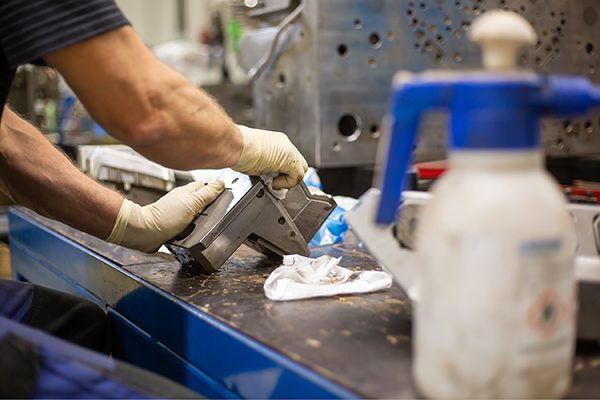
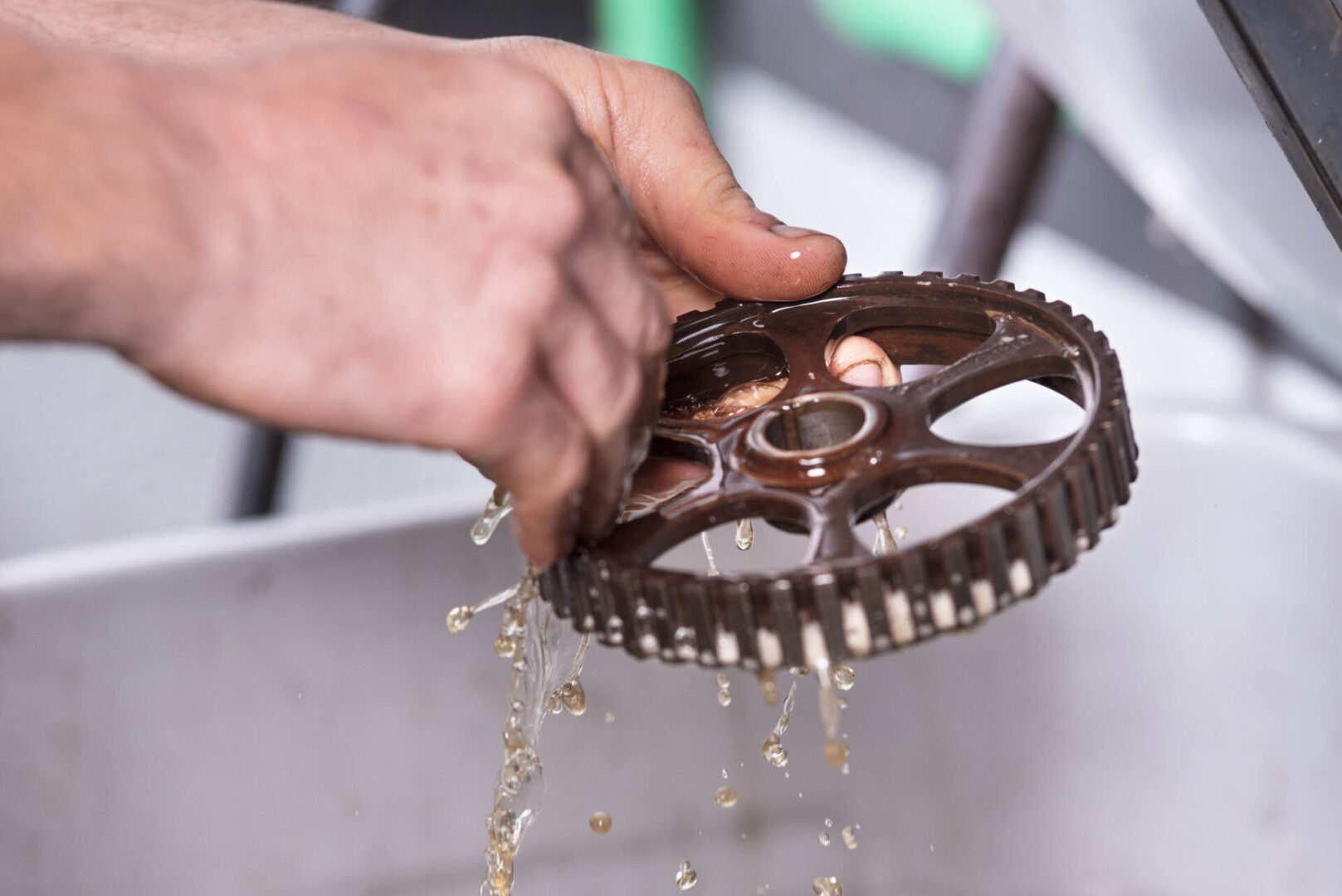
- Extraction: The part is washed to transfer contaminants into a fluid.
- Filtration: Fluid is passed through a membrane filter of a defined size.
- Analysis: The filter is weighed to determine the total mass of the contaminant.
INDUSTRY-SPECIFIC STANDARDS
We provide tailored testing protocols that align with the stringent requirements of your specific sector:
Medical Devices
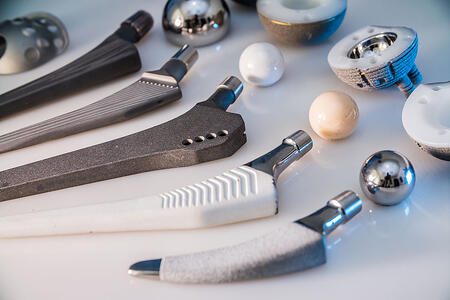
- Focus: Permanent implants and surgical instruments.
- Standard: ASTM F 2459 (Extraction and Gravimetric methods).
- Goal: Minimize post-surgery complications and ensure surface viability.
Aerospace
- Focus: Hydraulics, fueling systems, circuits, and telecommunications.
- Standard: AIA (American Aerospace Industry Association).
- Goal: Predict failures and ensure long-term corrosion prevention.
Transportation
- Focus: Critical vehicle components and foreign residue identification.
- Standard: SAE (Society of Automotive Engineers).
- Goal: Ensure component strength and passenger safety.


CLEANLINESS TESTING- STANDARDS
- ISO 10993- Part 12: Medical Device Testing
- ISO 16232 - Automotive Parts / Liquids
- ASTM F 2459 - Medical Devices
- ASTM E 1019
- ASTM E 1447
- ASTM E 1409
CLEANLINESS TESTING- FAQ
Cleanliness testing identifies foreign residues and particles, in order to determine whether their presence will affect the overall performance of a component or material.
Typically cleanliness testing can be performed in a matter of days and should it be necessary, expedited testing is available. Contact IMR Test Labs for more information.
Metals, non-metals, porous surfaces, polymers, and natural materials can all be tested for cleanliness. IMR Test Labs are able to test a variety of materials in any of our locations.
Alloy Chemistry
Antimony Analysis (ICP)
Cadmium Analysis (ICP)
Carbon, Sulfur, Hydrogen, Oxygen & Nitrogen
Contamination ID
Contaminant/ Corrodent Analysis
Filler/Additive Analysis
FTIR
Halogen Analysis (IC)
Heavy Metals Analysis
Hex Chrome (UV-VIS)
ICP-AES Analysis
ICP-MS Analysis
Impurities Analysis
Ion Chromatography
Material Certification
Metal Purity
OES Analysis
On-site PMI
PMI Testing (Positive Material ID)
Particle Size Analysis
Percent Crystallinity
pH
Polymer Testing
Powder Diffraction
Powdered Metal Analysis
Precious Metal Assay
Quantitative Analysis
Resistivity (ASTM D1125)
SEM-EDS
Semi-Quantitative Analysis
Trace Element Analysis
Unknown Alloy Identification
Unknown Material Identification
XRD Analysis
XRF Analysis
RELEVANT ACCREDITATIONS
Click here for a complete list of accreditations and certifications for all IMR Test Labs locations.
